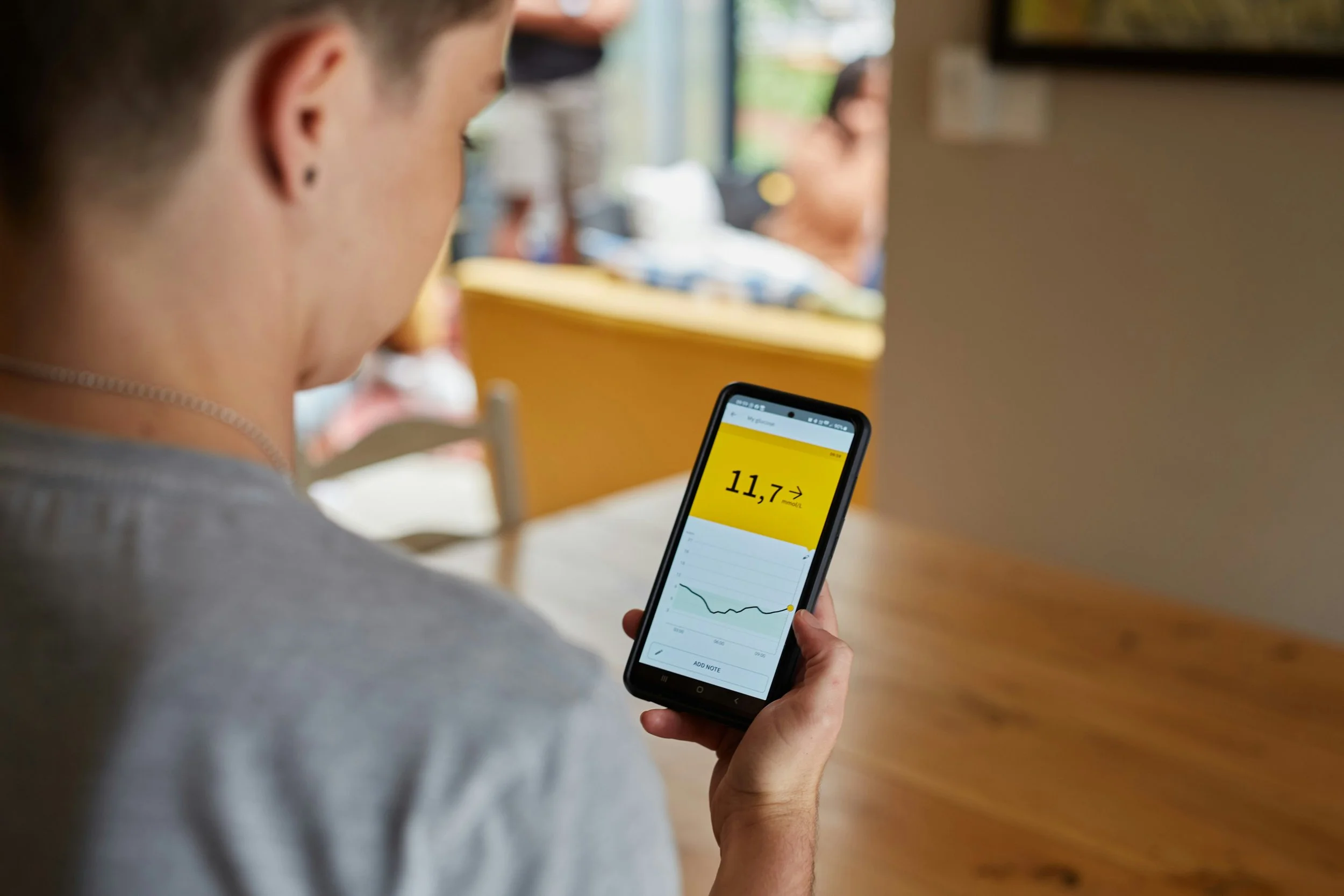
Our systematic review of T1D apps is published
The first paper from the T1MED project is out in the Journal of Medical Internet Research.
We wanted to answer a simple question. People with Type 1 Diabetes already use apps to help manage their condition, but do any of them actually improve psychological wellbeing, and which parts of them make the difference?
To find out we searched six databases and screened 2,142 articles. Only eight met our criteria: studies that measured psychological wellbeing in people with T1D using validated tools. That number is a finding in itself.
Across those eight studies we sorted what the apps actually did into six categories: therapy, education, self-management, peer support, healthcare professional and patient support, and parental support.
Only two of the eight reported an improvement in psychological wellbeing. One used therapy-based content. The other combined self-management, education and peer support. With so few studies, and so much variation in how they were designed and who took part, we could not say which functions or combinations were responsible.
What this means for T1MED
Most diabetes apps are built around blood glucose control, and wellbeing is an afterthought. Our review points to three things that need to change: interventions grounded in psychological theory rather than assembled feature by feature, people with lived experience involved in the design from the start, and functions combined rather than offered in isolation.
That is exactly how we are building the app we are co-designing with young people aged 11 to 17, their families and their clinicians.
Read the paper
Cloarec T, Cunneen K, Nickson D, Leigh S, Hanson P, Toro C. Functions, Features, and Psychological Well-Being Impacts of Type 1 Diabetes Self-Management Mobile and Web Apps: Systematic Review. J Med Internet Res 2025;27:e75280. doi: 10.2196/75280
The paper is open access at https://www.jmir.org/2025/1/e75280 and the protocol is registered on PROSPERO as CRD42024509788.